
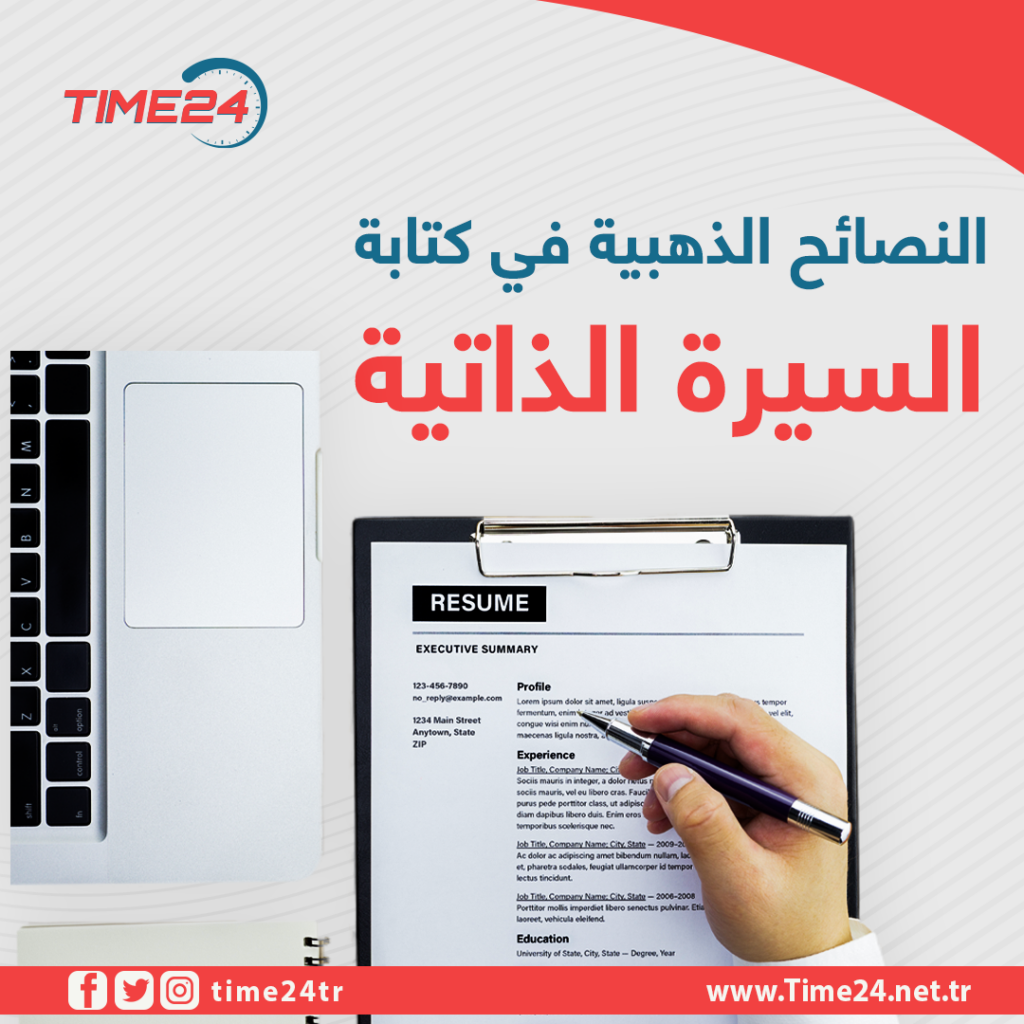
Golden Tips for Writing a Professional CV
Amid the large number of CVs received by Time24 with every job announcement, we have noticed that many submissions are unprofessional and prepared without sufficient knowledge or experience in CV writing requirements. This often negatively affects applications, despite candidates sometimes having strong qualifications that were not presented effectively or communicated properly.
For this reason, we decided to provide a comprehensive yet simplified guide on how to write a professional CV, so it can benefit anyone applying for a job, regardless of the position.
Definition of a CV and Its Importance
A Curriculum Vitae (CV) is a written document that summarizes an individual’s professional life in aspects relevant to employment, including experience, qualifications, certifications, achievements, previous roles, educational background, and personal interests. It is sent to an employer during the job application process and forms the first impression of the candidate, often determining whether they move on to the next stage: the interview.
Importance of the CV
A CV is a concise, comprehensive, and up-to-date overview of a person’s profile. It is the primary tool for self-promotion and attracting the employer’s attention. Through it, an employer may decide whether or not to invite you for an interview. Therefore, preparing and formatting your CV in a clear, attractive, and error-free manner is a top priority.
Key Sections to Include in a CV
To create a strong CV, it should include the following sections:
1. Personal Information
This section is essential and should appear clearly at the beginning of the CV. It includes:
-
Full name
-
Date of birth
-
Nationality
-
Phone number(s)
-
Email address
-
Professional social media accounts (e.g., LinkedIn)
-
Marital status
-
Current residence address
2. Academic and Educational Qualifications
Academic background is important to many employers. You should mention:
-
Academic degree
-
GPA (if high)
-
Field of specialization
-
Name of the educational institution
-
Year of graduation
Qualifications should be listed in reverse chronological order (most recent first). Basic and secondary education is usually omitted if you hold a university degree.
3. Training Courses
List training courses you have completed, including:
-
Course title
-
Duration
-
Organizing body
If you have attended many courses, include only those relevant to the job you are applying for.
4. Professional and Work Experience
This is one of the most important sections. Employers value clear and well-documented professional experience. Include:
-
Job titles
-
Responsibilities
-
Names of companies or institutions
-
Employment periods
List experiences from most recent to oldest, as recent experience is usually more relevant.
5. Voluntary Work
If you have participated in volunteer activities related to the job, include them. This section is particularly useful for candidates with limited work experience and reflects teamwork and social responsibility.
6. Skills, Hobbies, and Languages
Personal skills help employers form a general impression of your personality. Mention skills honestly and without exaggeration, such as:
-
Ability to work under pressure
-
Leadership and responsibility
-
Long working hours
-
Effective communication
-
Teamwork
-
Proficiency in required software and tools
Employers may ask for examples to support these skills during interviews.
For languages, list:
-
Native language
-
Other languages with proficiency levels (speaking, writing, reading)
7. References
Usually listed at the end of the CV. Include two or three non-relatives who can vouch for your experience and competence, such as former managers or colleagues. Mention:
-
Names
-
Job titles
-
Contact details
Always obtain their consent before listing them.
Quick Tips for Writing a Successful CV
-
Be honest and avoid exaggeration or false information. Admitting limited skills is better than being exposed during an interview.
-
Focus on persuasion by highlighting your strongest academic and professional attributes in a clear, professional language.
-
Keep it concise. Many employers do not read CVs longer than one or two pages.
-
Organize sections clearly and use clean formatting and readable fonts.
-
Use headings and bullet points rather than long paragraphs.
-
Ensure your CV is completely free of spelling and grammatical errors.
-
Use a professional and modern visual design, avoiding overly traditional layouts.
-
Print on white A4 paper only, if a hard copy is required.
-
Seek professional review before submission.
-
Do not staple, fold, or damage your CV.
-
Customize your CV for each job instead of using one generic version.
Important Tips for Sending a CV by Email
One of the most common mistakes is sending a CV as an attachment without writing anything in the email body. This often leads to the email being ignored.
A Professional Email Should Include Three Main Parts:
1. Subject Line
-
Clear and concise
-
Reflects the purpose of the email
-
Capitalize the first letter of each word in English, except prepositions and articles
2. Email Body
-
Greeting (e.g., Dear Ms. Sirin, / Dear Mr. Sami,)
-
Well wishes (I hope this email finds you well)
-
Brief self-introduction
-
Current position
-
Purpose of the email
-
Closing thanks (Thank you for your consideration)
-
Professional closing (Best Regards,)
-
Full name and job title
-
Signature and contact details
If the recipient is unknown, you may use:
-
To whom it may concern,
-
Dear Sir, / Dear Madam,
3. Attachments
-
CV (required)
-
Experience certificates
-
Training certificates
-
Cover letter (if applicable)
Final Note
We wish you success in your job applications and a prosperous professional career.
If you believe your skills align with the fields of work at Time24, we would be pleased to hear from you through our CV submission form.


